

 DeTalks
Procrastination is not about laziness. It is often an emotional response our brain uses to cope with difficult feelings like anxiety, perfectionism, or a fear of failure.
Seeing it this way is the first step toward treating yourself with more kindness. This understanding helps you find a supportive way forward.
Why Procrastination Is Not a Character Flaw
It's common to feel guilty for putting things off, calling it poor time management. But procrastination is less about defiance and more about a need to avoid uncomfortable feelings.
Think about preparing for a competitive exam in India or a big project at work. If the task triggers stress, your brain seeks relief by pushing it away, which can harm your mental well-being.
Shifting from Judgment to Understanding
Instead of feeling angry with yourself, try asking why you are avoiding the task. This compassionate curiosity is more productive than self-criticism.
This flowchart helps show how deeper psychological factors are often the true causes of procrastination.
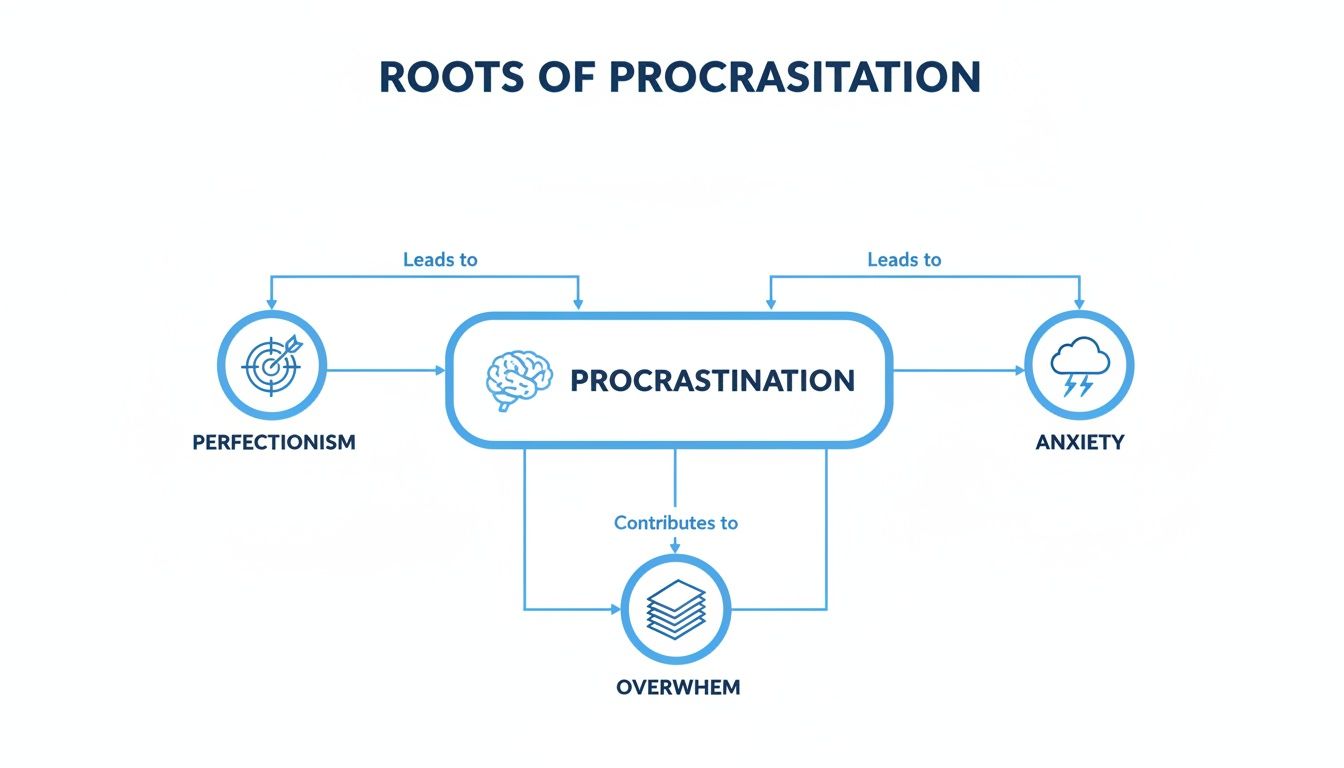
Factors like perfectionism can create a challenging cycle. The fear of not doing perfect work leads to procrastination, which then increases your anxiety.
Common Procrastination Triggers at a Glance
Pinpointing the feelings that trigger procrastination can help you break the pattern. This table outlines some common emotional triggers behind this behaviour.
| Trigger Category | Specific Examples | Impact on Well-being |
|---|---|---|
| Fear of Failure | Avoiding a project because you worry the outcome won't be good enough. Not applying for a job because you fear rejection. | Leads to missed opportunities, chronic self-doubt, and a feeling of being 'stuck'. |
| Perfectionism | Delaying the start of a report because the "perfect" opening sentence hasn't come to you. Reworking a simple email dozens of times. | Creates immense pressure and anxiety, making any starting point feel impossible and draining mental energy. |
| Anxiety & Overwhelm | Seeing a massive to-do list and not knowing where to begin, so you do nothing. A task feels too complex or vague. | Triggers a 'freeze' response, leading to complete avoidance and shutdown. Increases stress and guilt. |
These feelings are human, especially in high-pressure environments. Persistent workplace stress or academic demands can turn occasional procrastination into a regular habit.
This is a signal that your emotional needs may require attention. Addressing these underlying causes through self-compassion or professional counselling can help you move forward with more ease.
Please note: assessments mentioned are informational, not diagnostic. They are not a substitute for advice from a qualified mental health expert.
The Connection Between Anxiety and Procrastination
Procrastination is often a way to manage difficult emotions. When a task brings up feelings of anxiety or stress, our first impulse is to avoid it.
For a student in India facing board exams or a professional with a big presentation, the pressure can feel huge. Putting things off provides a brief, temporary escape from that anxiety.
Why Avoidance Feels Like a Solution
When we feel anxious, our brains seek safety. Delaying a stressful task gives us a moment of relief, making it feel like we've solved the problem for now.
But this is a short-term fix. The initial relief is soon replaced by guilt and the pressure of a looming deadline, creating a cycle of anxiety and procrastination.
Procrastination is often an attempt to manage negative moods. It’s an emotion regulation challenge, not a time management problem.
This viewpoint shifts the focus from self-blame to self-compassion. Recognising the pattern is the first step toward building healthier strategies that support your long-term well-being.
The Fear of Being Judged
The fear of being evaluated often fuels this anxiety. We worry about failing an exam, getting negative feedback, or not meeting expectations.
Procrastination can feel like a shield. The flawed logic is that if you rush a task at the last minute, you can't be judged on your true ability. Learning how to reduce test anxiety can directly help with these delays.
The Cycle of Stress and Self-Doubt
Putting things off often makes the feelings you were trying to avoid even stronger. The relief is temporary, followed by panic as the deadline gets closer.
This creates a difficult feedback loop:
- Anxious Trigger: A task sparks feelings of fear or dread.
- Avoidance Behaviour: You procrastinate to sidestep these emotions.
- Temporary Relief: For a short time, you feel better.
- Increased Guilt and Panic: Guilt and panic set in, making the original anxiety feel worse.
This cycle can damage self-confidence and contribute to challenges like chronic workplace stress or even depression. Breaking free is about addressing the emotional root of the issue.
Understanding this helps you see that the solution lies in building resilience and managing emotions. Support from counselling or therapy can provide tools to untangle this cycle for better productivity and happiness.
How Perfectionism Paralyzes Progress
The drive to do something perfectly can sometimes stop us from doing it at all. This all-or-nothing mindset can be a major source of procrastination.
Imagine a gifted artist staring at a blank canvas. They might feel so afraid of making an imperfect brushstroke that they cannot begin.

The Fear of Not Being Good Enough
At its core, this paralysis is often rooted in a fear of judgment. For a perfectionist, their work feels like a reflection of their personal worth.
This dynamic is often explored in therapy and counselling. The internal critic becomes so loud that avoiding the task seems like the only escape, fuelling a cycle of anxiety and procrastination.
Healthy Striving Versus Unhealthy Perfectionism
It is important to know the difference between high standards and unhealthy perfectionism. Healthy striving is about growth and accepts that mistakes are part of the process.
Unhealthy perfectionism demands a flawless outcome, leading to rigid thinking and harsh self-criticism. This pressure is a major driver of workplace stress and can lead to burnout or depression.
Seeing this pattern is an opportunity to practice self-compassion. The key to getting unstuck is to embrace the idea of 'good enough'.
Building Resilience Through Self-Compassion
The first step to breaking free is to shift from self-criticism to self-compassion. This means treating yourself with the same kindness you would offer a friend.
When you feel the urge to procrastinate, pause and acknowledge the feeling without judgment. Taking small steps, like breaking a project into tiny tasks, helps build resilience and gets you moving again.
Understanding Your Brain’s Role in Procrastination
Procrastination is often more about brain wiring than a lack of willpower. Your brain has a control centre for planning and starting tasks, known as executive functions.
When this system faces challenges, it's a neurological difference, not laziness. This can be a primary reason why you put things off.

Neurodiversity and the Procrastination Puzzle
Neurodiversity helps us see that brain differences are normal human variations. Conditions like Attention-Deficit/Hyperactivity Disorder (ADHD) are different neurological setups, not character flaws.
For someone with ADHD, procrastination can feel like a constant battle. This is because key executive functions are often challenged.
- Task Initiation: Just getting started can feel incredibly difficult.
- Time Perception: A challenge in sensing how long tasks will take can lead to last-minute rushes.
- Emotional Regulation: It can be hard to stick with boring or frustrating tasks.
This is not a choice; it's a result of brain chemistry. Understanding this helps you find strategies that work with your brain instead of against it.
The Role of Stress in a Neurodiverse Brain
For students and professionals, these neurological hurdles can feel even larger. Research in India has found a strong link between exam-time procrastination and mental health struggles like depression and anxiety. You can explore further research on student mental health00257-2/fulltext).
Understanding your unique brain is not an excuse. It is an explanation that empowers you to find the right tools and support.
Professional guidance through counselling and therapy can make a real difference. A good therapist can help you create personalised strategies that build genuine resilience and support your overall well-being.
Assessments for conditions like ADHD are informational, not diagnostic. They offer insights to help you find the right resources and a deeper, kinder understanding of yourself.
When Burnout and Depression Drain Your Motivation
Sometimes, the inability to start a task is a sign of a deeper lack of resources. When dealing with depression or burnout, even a small to-do item can feel overwhelming.
This is not a failure of willpower. It's a critical signal that your well-being needs attention.
The Heavy Weight of Exhaustion
Think of your motivation like a phone battery. With burnout or depression, you might start the day with very little energy left.
Simple actions can feel monumental. This is a clear sign your mind and body are running on empty, and acknowledging this is a step toward getting help.
Procrastination in this context can be a form of self-preservation. Your system is trying to conserve what little energy it has.
This inaction is tied to your mental health. An Indian study with college students showed that procrastination was linked to lower mental well-being and academic performance. You can read the full research about these findings.
Recognising the Signs of a Deeper Issue
How can you tell if procrastination is from burnout or depression? It often comes with a wider sense of apathy and exhaustion.
Look for these signs:
- Persistent Fatigue: A deep tiredness that rest does not seem to fix.
- Loss of Interest: Feeling disconnected from activities you once enjoyed.
- Feelings of Hopelessness: A sense that nothing you do matters.
- Cynicism or Detachment: Feeling cynical about your job or emotionally distant.
If these feelings are familiar, they are valid and deserve professional care. Realising your inaction stems from a deeper struggle helps you shift from self-blame to seeking healing and resilience.
A Path Toward Recovery
If this section feels familiar, your well-being should be your top priority. Pushing through it will likely make things worse.
Seeking professional support through counselling is an effective step. Therapy can help you explore the roots of your exhaustion and address the underlying depression or burnout. This supportive journey helps you rebuild your resources and feel whole again.
Finding Supportive and Actionable Next Steps
Realising that procrastination is an emotional response is a breakthrough. It moves you away from self-blame and toward practical steps that help.
When you see delays as a signal of anxiety, depression, or burnout, you can seek the right support. The goal is to build a healthier relationship with yourself and your tasks. It's about developing the resilience to start, even when it’s hard.

When to Consider Professional Support
If procrastination is harming your work, relationships, or well-being, it may be time to talk to a professional. Reaching out for therapy is a courageous step toward feeling better.
Consider professional support if:
- Procrastination is paired with constant sadness, hopelessness, or fatigue.
- Your avoidance is driven by overwhelming anxiety or fear.
- You feel stuck, and nothing you've tried has helped.
A therapist provides a safe space to explore the causes of procrastination specific to you. They can help you untangle the feelings driving the behaviour and guide you toward lasting change.
What Therapy for Procrastination Looks Like
Therapy for procrastination digs into root causes like perfectionism or workplace stress. Methods like Cognitive Behavioural Therapy (CBT) help you challenge unhelpful thought patterns.
In therapy, you learn to quiet your inner critic and practice self-compassion. The aim is to build emotional skills to face challenges with confidence.
This process is about empowerment. It gives you tools to understand your triggers and respond constructively, helping you build a more balanced and fulfilling life.
Building Resilience and Self-Compassion
The path forward involves learning how to overcome procrastination through emotional understanding. The journey rests on two pillars: resilience and self-compassion.
These are skills you build through practice. Professional counselling can offer structured support as you learn. Remember, the goal isn't perfection—it's progress.
Supportive Takeaways for Your Journey
- Acknowledge Without Judgement: When you procrastinate, gently ask, "What feeling am I trying to avoid?" Curiosity is a kinder guide than criticism.
- Embrace 'Good Enough': Give yourself permission to be imperfect. A messy first draft is better than a blank page.
- Celebrate Small Wins: Break large projects into tiny steps. Completing even the smallest task is a victory to celebrate.
This is a journey of hope. Effective help is available, and you have the power to create lasting, positive change.
Please remember, assessments mentioned are informational, not diagnostic. They are not a substitute for a formal diagnosis from a qualified mental health professional.
Your Questions About Procrastination, Answered
Is Procrastination a Sign of a Mental Health Condition?
It can be. While not a diagnosis itself, chronic procrastination is often a symptom of deeper struggles like anxiety, depression, or ADHD.
If delaying tasks causes significant distress to your work, relationships, or general well-being, it is a strong indicator. It is about gaining understanding to find the right support.
How Does Therapy Actually Help with Procrastination?
Therapy is effective because it addresses the root causes of procrastination. A therapist helps you uncover the anxious thoughts or perfectionistic beliefs driving your avoidance.
Counselling is about building emotional regulation skills and self-compassion. This creates lasting change, boosting your overall resilience and happiness.
A key takeaway is that procrastination is rarely about laziness. It is a response to feeling overwhelmed or anxious, and professional support helps you navigate those core emotions.
What's the Real Difference Between Laziness and Procrastination?
Understanding this difference is key to self-compassion. Laziness is an unwillingness to do something, often without much stress attached.
Procrastination is an active process. You want to do the task but delay anyway, which comes with guilt, anxiety, and stress.
How Can I Support Someone Who Procrastinates?
Offer empathy instead of judgment. Calling someone 'lazy' or telling them to 'just do it' can deepen their feelings of shame.
Instead, listen without judgment and ask what makes the task feel difficult. Helping them break it down into smaller steps or offering patient encouragement can be more supportive.
If you see these patterns in yourself and feel ready to understand what's driving your procrastination, DeTalks is here to help. Explore our directory of qualified therapists or use our confidential assessments to gain clarity on your journey toward better well-being. Find the right support for you at https://detalks.com.