

 DeTalks
Thinking about becoming a therapist in India is a wonderful and meaningful choice. The conversation around mental health is growing, and your contribution can make a real difference.
This path is more than just earning a degree; it’s a journey of understanding human emotions and behaviour. You will learn to support people through difficult times, helping them with challenges like anxiety, depression, relationship issues, and workplace stress.
Your work will be rooted in the Mental Health field, a space dedicated to building resilience and fostering well-being. This career is a calling that requires empathy, patience, and a genuine desire to help others live more fulfilling lives.
The Commitment and the Critical Need
Becoming a therapist in India is a long-term commitment, not a quick process. It can take anywhere from 7 to 14 years of education and training after high school, which reflects the deep responsibility of the role.
This dedication is essential because India has a significant shortage of mental health professionals. Research shows India has just 0.75 psychiatrists per 100,000 people, far below the World Health Organization's recommendation of three. You can learn more in this mental health workforce analysis.
This gap means millions of people lack access to the support they need. Passionate and skilled individuals like you are needed to help close this gap and promote well-being.
Think of this guide as a supportive companion on your journey. It offers a clear roadmap through the educational steps, training requirements, and professional milestones of becoming a therapist in India.
Building Your Academic Foundation
Your journey to becoming a therapist begins with a strong academic foundation. This is where you build a deep understanding of human behaviour, psychological theories, and ethical principles.
Think of your education as a structured apprenticeship for the mind. The first step on this path is your Bachelor's degree.
Starting with Your Bachelor's Degree
The most direct route is a three-year Bachelor of Arts (B.A.) or Bachelor of Science (B.Sc.) in Psychology. This degree lays the essential groundwork for your future career.
You will study foundational subjects like developmental, social, and cognitive psychology. Many Indian universities welcome students from Arts, Commerce, or Science backgrounds, bringing diverse perspectives to the field. These years are a time to absorb theory and confirm if this career feels right for you.
This visual flow shows the typical academic and practical stages involved in becoming a therapist in India.
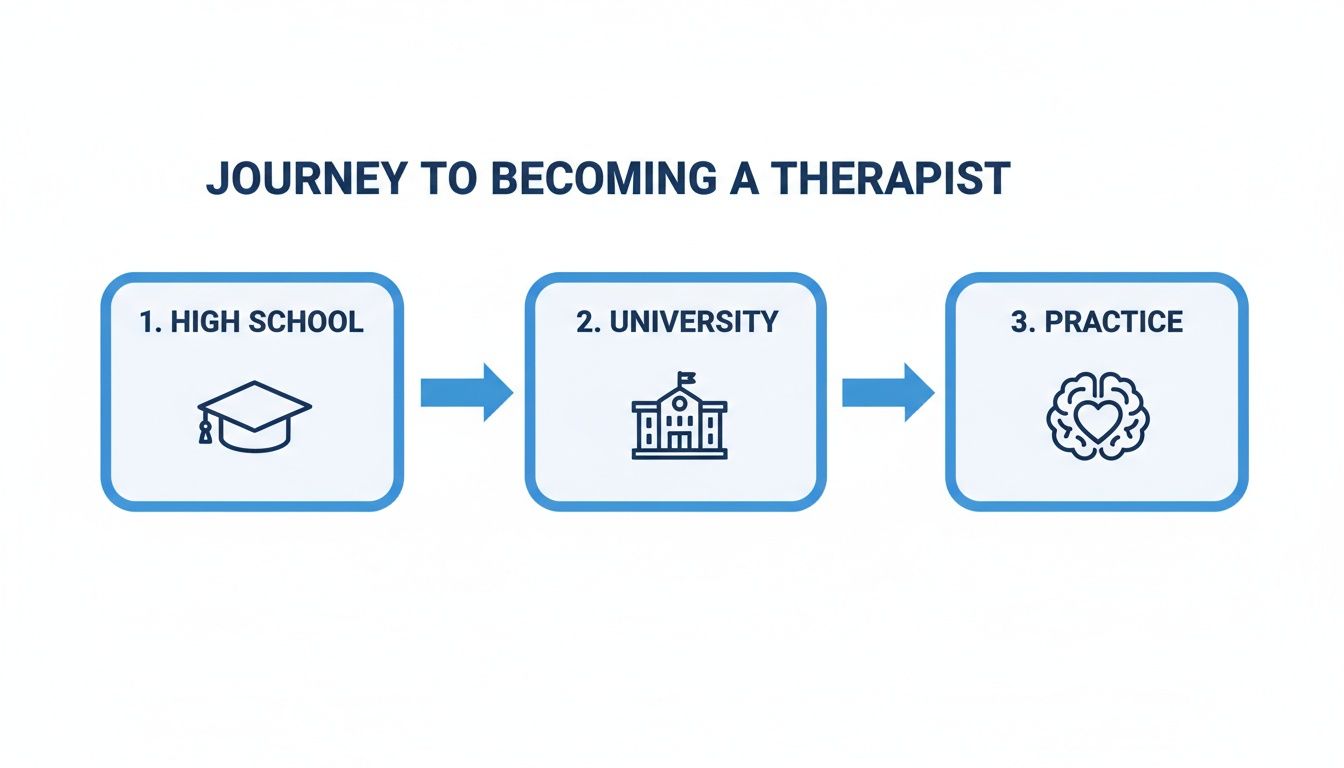
As you can see, the journey is a clear progression from foundational education to specialised training and, finally, professional practice.
Advancing with a Master's Degree
A Bachelor's degree is a great start, but a Master's degree is where you begin to specialise. In India, an undergraduate degree alone is not enough to practise as a therapist. You will need a two-year Master of Arts (M.A.) or Master of Science (M.Sc.).
This is when you choose a path that aligns with your career goals. Common specialisations include:
- Clinical Psychology: Focuses on assessing and supporting people with mental, emotional, and behavioural challenges.
- Counselling Psychology: Concentrates on helping people navigate life's difficulties, such as workplace stress, relationship issues, and personal growth.
- Industrial/Organisational Psychology: Applies psychological principles to improve workplace productivity and employee well-being.
Your Master's program shifts from theory to practical skills. You will learn about therapy techniques, psychological assessments, and ethical guidelines, all to prepare you for working with clients. Psychological assessments are always informational, never diagnostic.
This advanced education is about building the competence and ethical grounding needed to hold a safe space for others and guide them toward resilience and happiness.
Choosing your path in higher education is a significant decision. Here's a quick look at how the main educational routes compare.
Educational Pathways for Therapists in India
| Qualification | Typical Duration | Core Focus | Common Career Path |
|---|---|---|---|
| B.A./B.Sc. in Psychology | 3 Years | Broad foundational knowledge of psychological principles and theories. | Entry-level roles in HR, research assistance, or as a stepping stone to a Master's degree. |
| M.A./M.Sc. in Counselling Psychology | 2 Years | Practical counselling skills, therapeutic techniques, and client-centred approaches. | Counselling in schools, universities, NGOs, corporate settings, or private practice. |
| M.A./M.Sc. in Clinical Psychology | 2 Years | Psychopathology, and assessment approaches. Prepares for further clinical training. | Assistant psychologist roles, research, or entry into M.Phil./Psy.D. programmes for licensing. |
| M.Phil. in Clinical Psychology (being phased out) | 2 Years | Intensive, RCI-accredited clinical training, and supervised practice. | Licensed Clinical Psychologist in hospitals, mental health clinics, and private practice. |
| Psy.D. / Ph.D. in Psychology | 3-5 Years | Psy.D: Advanced clinical practice and application. Ph.D: Research and academia. | Advanced clinical practice, academia, research, leadership roles in mental health organisations. |
Each qualification builds on the last, opening up different professional opportunities and levels of practice.
Navigating Higher Qualifications and Regulatory Changes
To become a licensed Clinical Psychologist, the traditional path included an M.Phil. in Clinical Psychology. However, the regulatory landscape is changing.
The Rehabilitation Council of India (RCI) is updating its licensing requirements. The M.Phil. is being replaced with new alternatives, which has caused some confusion. To qualify for these new programs, you will need either a four-year bachelor's degree or a three-year bachelor's followed by a two-year master's. It is crucial to stay informed about these evolving psychologist training requirements in India.
Some professionals also pursue a Doctor of Psychology (Psy.D.) or a Doctor of Philosophy (Ph.D.). A Psy.D. focuses on clinical practice, while a Ph.D. is research-oriented, ideal for those interested in academia. These qualifications open doors to private practice, hospital work, research, and policy-making.
Understanding Professional Licensing and Registration in India
Navigating professional credentials in India can feel confusing. The terms ‘counsellor’ and ‘psychologist’ are often used interchangeably, but they can represent different scopes of practice, especially regarding licensing.
Understanding this landscape is essential for your professional identity and for the clients who trust you. One path is regulated by the government, while the other relies more on voluntary certifications and strong ethics.
The Gatekeeper: The Rehabilitation Council of India (RCI)
The Rehabilitation Council of India (RCI) is the official government body that regulates the training and practice of certain mental health professionals.
If you want to become a Clinical Psychologist, an RCI license is mandatory. This license proves you have completed rigorous, standardized training and legally allows you to conduct psychometric testing and use diagnostic labels.
Once licensed, you receive a unique Central Rehabilitation Register (CRR) number. This is required to use the title "Clinical Psychologist" and opens doors to work in hospitals and clinics.
The Unregulated World of Counselling
While clinical psychology is strictly regulated, the field of general counselling and therapy in India is largely unregulated. Currently, there is no single licensing authority for counsellors.
You can learn more about this regulatory situation in this detailed report on mental healthcare in India.
This means that someone with a Master's degree can start practising as a therapist. However, this freedom comes with a significant ethical responsibility. Your credibility depends on your commitment to high standards, continuous learning, and professional conduct.
In an unregulated field, your reputation is built on trust, ethics, and a genuine commitment to client well-being. Voluntary certifications and unwavering ethical practice become your most valuable credentials.
Many dedicated counsellors pursue voluntary certifications from respected organizations. This shows clients you are serious about providing quality, ethical care for challenges like anxiety and depression.
Why This Really Matters for Your Career
Understanding this distinction is fundamental to planning your career. Ask yourself what kind of work you envision doing.
Do you see yourself in a clinical setting, working with formal diagnoses and treatment plans? If so, the RCI-licensed path of a Clinical Psychologist is for you.
Or are you more passionate about offering supportive counselling for life's challenges, like workplace stress or personal growth? In that case, a career in counselling psychology might be a better fit, requiring a strong ethical compass and dedication to professional development.
Both paths are vital and contribute to the growing need for mental well-being in India. Making a clear decision now will set you on a path that feels right for you from the start.
From Theory to Practice: Gaining Supervised Experience
Academic knowledge is your foundation, but real-world experience is where you truly learn to be a therapist. Supervised practical training is the most important phase in becoming a confident, competent, and compassionate professional.
This is the bridge between knowing psychological concepts and sitting with a person to help them navigate their challenges. This hands-on experience is where your most significant growth will happen.

The Role of Internships and Practicums
Most Master’s programs in India include a mandatory internship or practicum. This is your first formal step into the professional world under the guidance of seasoned professionals.
You will transition from being an observer to an active participant. You'll learn to conduct intake interviews, take session notes, and perhaps co-facilitate group therapy. This is your chance to see how experienced therapists handle complex issues like severe anxiety, depression, or burnout.
What to Expect During Your Placement
Your supervised experience is comprehensive training that covers all aspects of professional practice.
You will engage in several key activities:
- Shadowing Senior Therapists: Observe different therapeutic styles and learn how to build rapport and structure sessions.
- Case Documentation: Learn the crucial skill of maintaining accurate and confidential client records, a vital ethical and legal responsibility.
- Direct Client Interaction: As you gain confidence, you will begin working with your own clients under close supervision.
- Participating in Case Conferences: These meetings offer valuable insights and collaborative approaches to challenging cases.
Supervision is not about being judged. It is a supportive, mentoring relationship designed to build your confidence, help you process your feelings, and develop a strong ethical foundation.
Finding the Right Internship Opportunity
Securing a great internship requires proactivity. Start looking early, network with professors and alumni, and create a resume that highlights your passion for mental well-being.
Try to explore a variety of settings to gain different perspectives on therapy.
Here are a few places to consider:
- Government and Private Hospitals: Gain exposure to a wide spectrum of mental health conditions, which is essential for clinical psychology.
- Non-Governmental Organisations (NGOs): Experience community mental health, often focusing on specific populations dealing with trauma or addiction.
- Schools and Universities: Work with students on challenges like academic stress, anxiety, and relationship issues.
- Corporate Wellness Programmes: Help employees manage workplace stress, burnout, and career growth through Employee Assistance Programmes (EAPs).
The Heart of Supervision: Nurturing Your Growth
Your supervisor is your mentor, guide, and safety net. They are there to help you manage the emotional weight of this work and ensure you provide the best possible care while maintaining your own well-being.
This relationship is built on trust and open communication. It is a confidential space to discuss your cases, share uncertainties, and grow as a professional. This mentorship builds the resilience and compassion needed to avoid burnout and cultivate a practice rooted in self-awareness.
Launching and Growing Your Therapy Career
After years of education and training, the rewarding part of your journey begins. A therapist's career in India offers a variety of opportunities to make a real difference.
Your first decision is to choose a professional setting that feels right for you. Whether it's a hospital, school, or private practice, you can find a path that aligns with your passion.
Navigating Different Career Paths
The demand for skilled mental health professionals is growing across India. Understanding the nuances of each setting can help you find your place.
-
Clinical Settings (Hospitals and Clinics): This is a common path for RCI-licensed Clinical Psychologists. You will work with diverse populations, often collaborating with other healthcare professionals in a high-energy environment.
-
Schools and Universities: As a school counsellor, you help students manage academic stress, anxiety, and developmental challenges. This role is crucial for building emotional resilience in young people.
-
Corporate Wellness and EAPs: Many companies now recognize the impact of workplace stress and burnout. In an Employee Assistance Program (EAP), you support employees in navigating professional hurdles and improving their well-being.
-
Private Practice: This entrepreneurial path offers the freedom to build your own practice. You can specialize in areas you are passionate about, like relationship counselling or anxiety therapy, but it requires business sense as well as clinical skill.

Landing Your First Professional Role
Transitioning from trainee to professional can feel daunting. Be strategic and let your passion and skills shine through.
Your resume should tell a story, highlighting the skills you developed during internships. Use confident, clear language to show you are ready to contribute from day one.
Networking is also powerful. Attend workshops, join professional bodies, and stay connected with university alumni. These relationships can lead to mentorship, job opportunities, and a valuable support system.
Your first role is an extension of your training. Look for environments that offer good supervision and mentorship to build your confidence as you navigate your early career.
The Commitment to Lifelong Learning
Becoming a therapist is a journey of continuous growth. The field of psychology is always evolving, so Continuing Professional Development (CPD) is essential for an effective and ethical practice.
There are many ways to stay current:
- Attending Workshops and Seminars: Learn new techniques and deepen your knowledge in areas like trauma-informed care or depression treatment.
- Pursuing Specialised Certifications: Enhance your skills with credentials in modalities like Cognitive Behavioural Therapy (CBT) or mindfulness-based practices.
- Joining Peer Supervision Groups: Discuss challenging cases with trusted colleagues to gain fresh perspectives and prevent burnout.
This dedication to learning ensures your practice remains relevant and effective. For those considering starting their own practice, a guide on the best website builders for therapists can help create a professional online presence with features like appointment scheduling.
Your Questions Answered: Getting Real About the Path to Becoming a Therapist
Deciding to become a therapist is a big step, and it's natural to have questions. Let's address some of the most common concerns about this journey.
This is a candid look at the practical details, from timelines and earnings to the personal qualities that make a great therapist.
How Long Does It Realistically Take?
Becoming a qualified therapist in India is a significant time commitment. You should plan for a journey of at least five to seven years after starting your undergraduate degree.
Here’s a typical timeline:
- Three years for a Bachelor’s degree in Psychology.
- Two years for a Master’s degree in Counselling or Clinical Psychology.
- One to two years of supervised internships and training after your Master's.
For those pursuing an RCI license as a Clinical Psychologist, the total time can extend to seven or eight years. Each stage is crucial for building the competence and confidence needed for this profession.
What Can I Expect to Earn as a New Therapist?
A therapist's starting salary in India varies based on location, qualifications, and workplace.
A new therapist with a Master's degree can typically expect to earn between ₹3.5 to ₹4.5 lakh per year. This is common for entry-level roles in schools, NGOs, or corporate wellness programs.
Don't be discouraged by starting salaries. Your earning potential grows with experience, reputation, and specialization. Therapists in successful private practice often have higher earning potential as they build their client base.
Can I Become a Therapist Without a Psychology Degree?
It's possible to become a therapist without a Bachelor's in Psychology, but it's not the most direct path.
Some universities in India allow students from other academic backgrounds to enroll in a Master's in Psychology. However, you will likely need to complete a bridge course or demonstrate a solid understanding of core psychology concepts. Research specific university requirements carefully, as each has its own eligibility criteria.
What Personal Qualities Are Most Important?
Therapy is a deeply human profession, and personal qualities are as critical as academic knowledge.
Great therapists cultivate these traits:
- Deep Empathy: The ability to understand another person's feelings while maintaining your own emotional balance.
- Rock-Solid Ethical Boundaries: Creating a professional, safe, and confidential space is essential for building trust.
- Emotional Resilience: You will support people through difficult experiences, and inner strength is needed to manage this emotional load and avoid burnout.
- A Commitment to Self-Awareness: The best therapists are always working on themselves, understanding their own biases and seeking support when needed.
This journey of self-improvement is continuous. These supportive takeaways can help you remain a stable, compassionate, and effective presence for your clients as they work toward healing and well-being.
At DeTalks, we understand that the path to becoming a therapist is as much about personal growth as it is about professional training. Whether you're an aspiring professional seeking to understand the field or someone looking for support, our platform connects you with qualified therapists and evidence-based tools to foster well-being and resilience. Explore our resources and find the right support for your journey at https://detalks.com.