

 DeTalks
Becoming fearless isn't about flipping a switch to turn off fear. It's about learning to act even when you feel nervous, building courage one small step at a time. True fearlessness is found in how you manage fear, not in pretending it doesn't exist.
Understanding Fear Before You Can Face It

Your journey starts with a simple but profound realisation: fear isn't your enemy. It's a natural, protective instinct wired into our biology for survival, like an internal alarm system. It flags potential dangers, whether that's a looming deadline at your Delhi office or a difficult personal decision.
When that alarm sounds, your body's 'fight-or-flight' response kicks in. Your heart may pound, your breath might become shallow, and your muscles could tighten. This is just your nervous system preparing you to handle a perceived threat, a reaction that has kept humans safe for centuries.
Normalising the Feeling of Fear
Acknowledging this biological process can be a game-changer. Fear isn't a character flaw or a sign of weakness; it's a completely universal human experience. In India, with significant social and family pressures, it's very common to feel anxious about the future or experience workplace stress.
These feelings are valid signals. The goal isn't to shut the alarm off, but to listen and understand what it’s telling you. When you normalise these physical sensations, you reduce their power to hold you back.
This shift in perspective is the foundation of resilience. Once you stop fighting the feeling, you can start working with it. This change supports your mental well-being and helps you face challenges with a clearer mind.
Fear as a Compass for Growth
Here's another way to look at it: fear often points directly to what we value most. The fear of a big presentation exists because you care about professional success. The anxiety before a tough conversation shows how much that relationship means to you.
By viewing fear as a compass, you can use its energy to guide you toward growth. It shows you where you have an opportunity to become stronger and more courageous.
This flips the script entirely. Instead of instinctively avoiding situations that trigger fear, you can start seeing them as chances to expand your boundaries and build lasting self-trust.
The Role of Professional Support
Sometimes, fear can feel too big to handle on your own, evolving into persistent anxiety or contributing to feelings of depression. If fear is consistently disrupting your daily life, reaching out for professional support through therapy or counselling is an act of profound courage.
A trained professional offers a safe, non-judgemental space to explore the roots of your fears. They can equip you with proven strategies to manage challenges, question unhelpful thoughts, and build lasting emotional resilience. Asking for help is one of the bravest steps you can take.
Mapping Your Personal Fears to Gain Clarity

Before you can build courage, you need to know what you’re up against. A vague, heavy feeling of anxiety is powerful because it's undefined. The moment you name your fears, you begin to reduce their power.
Think of it like creating a map of your mind. A map doesn't remove the mountains or rivers, but it shows you the layout so you can navigate. By clarifying your specific fears, you turn them from shapeless worries into challenges you can prepare for.
Identifying Your Personal Triggers
We all have them: specific situations, thoughts, or people that set off our internal alarms. For many in India, these triggers are woven into daily life, from the pressures of workplace stress to the delicate balance of family expectations. The first step is to be honest about what makes you feel uneasy.
Where does fear show up for you? Is it in the boardroom, late at night while thinking about finances, or during a difficult conversation? Pinpointing these moments is key to understanding your experience.
Take some time to reflect with a notebook. This isn't a test; it's a private, informational exercise in self-awareness. Please remember, this is for informational purposes only and is not a diagnostic tool.
- At Work: What parts of your job create the most anxiety? Public speaking, performance reviews, or a difficult colleague?
- In Relationships: What fears arise with family, your partner, or friends? It could be a fear of rejection or a worry about disappointing others.
- About the Future: What are your biggest concerns? Career stability, health, or financial security?
- In Social Settings: Do certain situations make you uneasy, like large gatherings or making small talk?
Writing this down is an essential step in building resilience. You cannot address what you do not acknowledge.
Understanding the Roots of Your Fears
Once you know what you fear, it helps to ask why. Often, the surface fear is a symptom of a deeper concern. This insight helps you address the root cause as you learn how to become fearless.
A classic example is the fear of public speaking. For most, it's not about speaking itself but a fear of being judged or failing publicly. Similarly, anxiety about a family get-together might stem from a fear of not meeting expectations.
To illustrate this connection, here’s a quick look at some common fears and what might be driving them. This table is purely informational and not intended for diagnosis.
Common Fear Triggers and Their Underlying Causes
This table helps you identify common fears and understand their potential psychological roots, promoting deeper self-awareness.
| Common Fear | Potential Underlying Cause | Relatable Scenario |
|---|---|---|
| Public Speaking | Fear of judgement, failure, or appearing incompetent | Feeling your heart pound before a work presentation, convinced you'll forget your words. |
| Social Gatherings | Fear of rejection, social inadequacy, or not fitting in | Avoiding a party because you're worried you won't have anything interesting to say. |
| Conflict/Disagreements | Fear of abandonment, disappointing others, or being disliked | Agreeing to something you don't want to do just to avoid an argument with a loved one. |
| Financial Instability | Fear of losing control, insecurity, or inability to provide | Constantly checking your bank account and feeling a sense of dread about unexpected expenses. |
| Career Setbacks | Fear of inadequacy, not living up to potential, or failure | Feeling paralysed by the thought of applying for a promotion because you might not get it. |
Looking at your fears this way can be a game-changer. It helps you see the real issue you can work on.
Acknowledging the deeper cause is an act of self-compassion. It allows you to understand why you feel a certain way, which is far more helpful than criticising yourself for feeling it.
This process is fundamental to improving your overall well-being. Once you understand your triggers, you’re in a much better position to find strategies that work, whether on your own or with professional counselling. By turning inward with curiosity, you’ve already taken a brave and powerful step.
How to Reframe Your Thoughts About Fear
Your mind is a powerful storyteller, and the tales it weaves about your fears can feel incredibly real. This internal narrative shapes your emotions and actions. A key step toward becoming fearless is learning how to gently change that story.
The good news is you don't have to be a passive audience to your thoughts. Techniques from approaches like Cognitive Behavioural Therapy (CBT) offer practical tools to challenge and reshape unhelpful thought patterns. The goal is to put you back in the driver’s seat.
Understanding Your Automatic Thoughts
When faced with something scary, your brain often jumps to instant conclusions called "automatic thoughts." These thoughts are usually negative and can pop into your head so quickly that it's easy to accept them as fact.
For instance, after receiving critical feedback, your automatic thought might be, "I'm terrible at my job." This single thought can trigger a cascade of anxiety, shame, and an urge to avoid work.
The first step is simply to notice these thoughts as they happen, without judgement. This practice of observing your thoughts is a cornerstone of building mental resilience. It creates a small but crucial gap between the thought and your reaction, giving you the power to choose a different response.
The Power of Cognitive Reframing
Once you get better at spotting automatic negative thoughts, you can start to question them through a process called cognitive reframing. It’s not about forced positivity; it’s about finding a more balanced and realistic point of view.
Think of yourself as a kind detective investigating your own thoughts. Is there solid evidence for this thought, or is it an assumption? Are there other ways to look at this situation? Asking these questions starts to loosen fear’s grip.
Cognitive reframing is the practice of consciously choosing your perspective. It’s about shifting from a narrative of fear to one of possibility and strength, which is essential for managing workplace stress and personal anxiety.
Let's take the thought, "I'm going to fail this presentation." A more balanced, reframed version could be, "I've prepared well, and I will do my best. Even if I make a mistake, it's an opportunity to learn." This new thought changes the emotional tone from panic to empowerment.
Putting Reframing into Practice
Changing lifelong thought habits takes consistent effort. A simple but effective way to start is the "Catch It, Check It, Change It" technique.
- Catch the Thought: The moment you feel that surge of fear or anxiety, pause. What was the exact thought that just ran through your mind?
- Check the Thought: Now, examine the evidence. Is this thought 100% true? What are the actual chances of it happening?
- Change the Thought: Create a new, more balanced thought. Remember, this is about finding a perspective that is more realistic and genuinely helpful.
This process is a skill that gets easier with practice. With time, you'll find that challenging fearful thoughts becomes more natural, which can make a huge difference in preventing feelings that may lead to depression or burnout.
Reframing thoughts is a profound act of self-compassion. It’s about treating yourself with the same kindness you’d offer a close friend. This builds a foundation of mental strength that makes the journey toward becoming fearless not just possible, but sustainable, and is a crucial skill whether you're navigating personal challenges or seeking support through therapy.
Face Your Fears Safely with Gradual Exposure
Once you’ve started to reframe your thoughts, the next step is to gently and safely begin to face what scares you. We're not talking about jumping into the deep end. Instead, we'll use a compassionate and effective strategy called gradual exposure.
The idea is simple: by systematically and safely exposing yourself to your fears in small, manageable doses, you retrain your brain. You show it, through experience, that the perceived threat isn't as dangerous as it feels. This process, a cornerstone of effective counselling and therapy, helps reduce your fear response over time.
Create Your Own Fear Ladder
The first step is to create a personal "fear ladder." This is a list of situations related to your fear, ranked from the least scary to the most terrifying. It’s a brilliant tool because it breaks down a huge challenge into small, achievable steps.
Let's say your fear is social anxiety at work events. A massive networking event in Mumbai might feel like a 10/10 on your fear scale, while saying "good morning" to a colleague is a 1/10. Your ladder helps you bridge that gap without overwhelming your stress levels.
Here’s what a fear ladder could look like for someone struggling with social anxiety at work:
- Rung 1 (Lowest Fear): Make eye contact and smile at a colleague in the hallway.
- Rung 2: Ask a coworker a simple, work-related question.
- Rung 3: Have a five-minute chat with a team member by the coffee machine.
- Rung 4: Eat lunch with a small group of colleagues you know fairly well.
- Rung 5: Go to a small, informal team meeting and aim to contribute one comment.
- Rung 6 (Highest Fear): Attend a big company-wide social event for 30 minutes.
Start Small, Celebrate Your Wins
The secret is to start at the bottom of your ladder. Don't think about the next rung until you feel reasonably comfortable with the one you're on. When you're in that situation, try to stay long enough for the initial wave of anxiety to rise and then recede, teaching your brain that the feeling is temporary.
The goal of each step isn't to become fearless overnight. It’s to learn that you can tolerate the discomfort and that you'll be okay. Every small victory builds confidence and resilience.
Make sure you celebrate every single win, no matter how tiny it seems. Acknowledging your courage reinforces positive behaviour and builds momentum. For those with specific phobias, learning the practical steps to overcome fear of heights offers a great template for building a similar ladder.
Resilience in the Face of Real-World Fear
We saw this principle of building resilience play out on a massive scale during the COVID-19 pandemic. Research has shown that fear levels were high across many populations, often made worse by widespread job losses and financial instability.
However, studies also revealed something hopeful: people who actively adapted—by creating new routines, leaning on support networks, or seeking therapy—reported lower levels of fear over time. In India, a survey found 74% of people felt stressed and 88% anxious after lockdown, leading many to seek mental health support for the first time. You can read full research on post-lockdown anxiety and resilience to see the data.
This real-world example shows that courage isn't something you're born with; it grows from consistent, brave action. Whether you're facing workplace stress or a societal crisis, taking things one step at a time rebuilds your sense of control and can help manage feelings that might otherwise lead to depression.
Building Your Personal Well-Being Toolkit
Reframing thoughts and facing fears are massive parts of this journey. But it's just as important to build a solid foundation of well-being to support you. Fear and anxiety thrive when you're feeling run down or burnt out, so crafting a personal toolkit of supportive practices is essential.
This is about the small, consistent actions that protect your mental and emotional energy. Think of it like charging a battery; you need that power to do the challenging work of building courage and resilience.
Ground Yourself with Mindfulness and Routine
When a wave of anxiety hits, it can feel like you’re being swept away. Grounding techniques are simple, in-the-moment practices that pull you out of the storm in your mind and anchor you in the present. One effective method is the 5-4-3-2-1 technique.
Take a slow, deep breath and gently notice:
- 5 things you can see.
- 4 things you can physically feel.
- 3 things you can hear.
- 2 things you can smell.
- 1 thing you can taste.
This quick exercise reconnects you with your immediate environment and can dial down the intensity of anxiety. Beyond this, a consistent daily routine creates stability and predictability, which can calm the nervous system and support your overall well-being.
Nourish Your Body to Strengthen Your Mind
The link between physical and mental health is undeniable. The journey of learning how to become fearless is much harder when your body doesn't have the fuel it needs. Poor sleep, for example, is directly linked to heightened anxiety and a lower capacity to handle stress.
Prioritising your physical health is a direct investment in your mental resilience. It doesn't have to be complicated.
- Sleep: Aim for 7–8 hours of quality sleep. A calming pre-sleep routine can signal to your body that it's time to wind down.
- Nutrition: A balanced diet helps regulate your mood and energy. Relying too often on processed foods can contribute to feeling sluggish and may impact your mood.
- Movement: Regular physical activity is a powerful tool for managing anxiety and symptoms of depression. Even a brisk 20-minute walk can release endorphins and clear your head.
Think of sleep, nutrition, and exercise as the three pillars supporting your mental well-being. If one is shaky, the entire structure becomes less stable.
This simple infographic breaks down how to create a fear ladder, a key tool for methodically building your resilience.
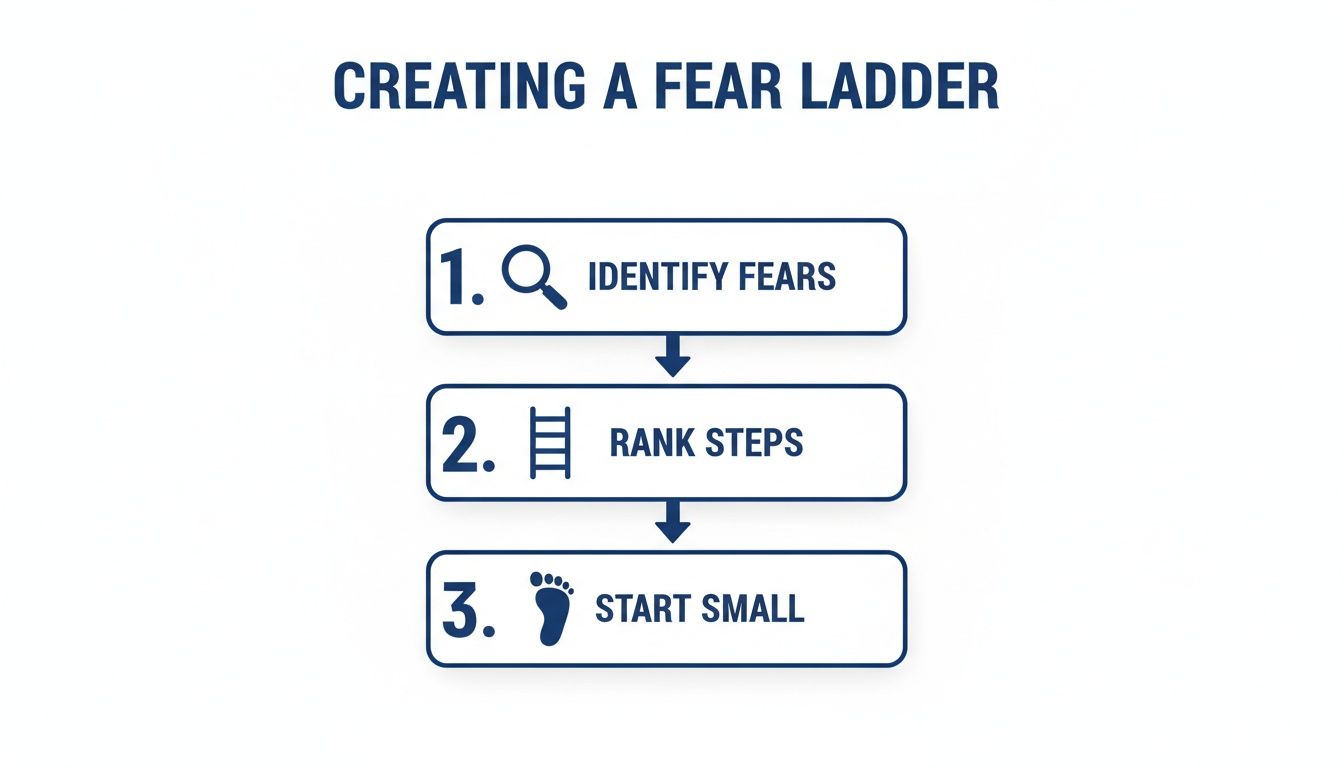
As this visual guide shows, the process of facing fears isn't about diving into the deep end. It’s a structured approach, starting with self-awareness and moving toward small, deliberate actions.
The Power of Connection and Support
Fear loves to grow in isolation. When you're alone with your worries, they can feel enormous and insurmountable. This is why connection is a vital piece of your well-being toolkit.
Reaching out to friends, family, or a support group can offer perspective, comfort, and a reminder that you are not alone. In India, where community and family ties are central to life, this can be an incredible source of strength and happiness.
And if you feel your immediate circle doesn't quite understand, seeking professional counselling or therapy can provide that safe, non-judgemental space. Your toolkit is a combination of self-care and supported care—knowing when to lean on each is a true sign of strength.
When to Consider Professional Support
Knowing when to reach out for help is not a sign of weakness; it's an act of courage and self-awareness. While the strategies we've discussed are powerful, there are times when the weight of fear, stress, or anxiety is too heavy to lift on your own.
That’s when bringing in a professional can make all the difference. If fear consistently gets in the way of your work, relationships, or joy, talking to a professional can offer a clear path forward. Therapy and counselling provide a safe, confidential space to unpack these feelings without judgement.
Understanding Your Support Options
What's the difference between counselling and therapy? Counselling often focuses on specific, immediate issues—like navigating workplace stress or a tough life transition—and is usually more short-term.
Therapy often takes a wider view, helping you explore deeper, long-standing patterns of thought and behaviour that might be fuelling chronic anxiety or persistent feelings of depression. The goal is to foster a deeper self-understanding that leads to lasting change and resilience.
Seeking professional help is an investment in your well-being. You’re partnering with a trained expert to build the tools you need to face life's challenges with more compassion and courage.
If you’re feeling anxious, you are not alone. In India, a 2021 study involving over 10,000 people revealed that 88% reported feeling anxious post-pandemic, leading to a significant increase in people seeking therapy. This shows that asking for help is a normal part of taking care of your mental health. You can read the full research about anxiety and resilience in India to learn more.
How to Find the Right Professional
Finding a therapist doesn't have to be overwhelming. When you're looking, try to find qualified professionals with experience in areas you're dealing with, like anxiety or stress management. Many offer an initial consultation, which is a great opportunity to see if you connect with their style.
Choosing to get help is a powerful step. It's not about finding a "cure," but about gaining a skilled ally who can help you build resilience, manage your fears, and cultivate a stronger sense of well-being.
Supportive Takeaways
Building courage is a personal journey, not a race to a finish line. Remember that progress, not perfection, is the goal. Here are a few supportive takeaways to keep in mind.
Is It Possible to Get Rid of Fear Completely?
The goal isn’t to erase fear. Fear is a natural, protective instinct. The real aim is to change your relationship with it, so it no longer controls your decisions. True fearlessness means acting with courage, even when fear is present.
How Long Does This Take?
There's no set timeline, as everyone's journey is unique. Some people feel small shifts in their mindset within a few weeks of consistent practice. Building deep, lasting resilience is more like a marathon than a sprint, so be patient and compassionate with yourself.
What’s the Difference Between Fear and Anxiety?
Fear is typically a response to a clear, present danger. Anxiety, on the other hand, is often a more vague, persistent feeling of dread about a future threat. Though they feel different, the tools for managing them—like mindfulness, reframing thoughts, and counselling—work well for both.
Remember, the aim isn't a life without fear, but a life where fear doesn't have the final say. True courage is moving forward despite the feeling, a skill that strengthens with practice and compassion for yourself.
This is all about building a more resilient you, anchored in a strong sense of well-being and happiness.
If you feel like fear or anxiety is consistently holding you back, talking to a professional can be a game-changer. There are many resources available with qualified therapists and informational assessments to help you find your footing. Please note, any assessments are for informational purposes only and are not a substitute for a professional diagnosis.
Take the next step with confidence and find the right support for your journey.