

 DeTalks
Your mindset is a powerful force that shapes how you see the world. Think of a positive attitude and a negative attitude as different lenses—one colours your world with hope, while the other can cast shadows of doubt.
Understanding this difference is a vital first step toward improving your emotional well-being and building a more resilient life.
How Your Mindset Shapes Your Reality
Welcome. This guide explores the deep connection between your thoughts and your life's direction. Your attitude is like a pair of glasses; whether they're rose-tinted or grey changes your entire view of the world.
Navigating challenges like workplace stress, anxiety, or burnout can feel overwhelming, especially in today's demanding world. Whether you're in India or anywhere else, please know you're not alone in feeling this way. Understanding your mindset is key to creating meaningful change.
The Power of Your Perspective
Your attitude is more than just a passing mood; it's a settled way of thinking that quietly guides your reality. It's the inner voice that helps you interpret events, handle setbacks, and connect with others.
This internal framework is what helps you either build resilience or get stuck in cycles of stress and negativity. Exploring the power of perception is a great way to understand how you can begin reshaping your own.
A persistent negative attitude can sometimes be linked to mental health challenges like depression and anxiety. Awareness and support are crucial, as many people face these struggles without the resources they need.
Please remember, this article is for informational purposes only and is not a substitute for professional medical advice. The assessments mentioned are for insight and are not diagnostic tools. If you are struggling, seeking professional counselling is a sign of strength.
Understanding Positive vs Negative Attitudes
Have you noticed how some people find a silver lining in every cloud, while others focus on the storm? That’s attitude at work. It's the lens through which you interpret and react to life's challenges.
Your positive attitude and negative attitude are two powerful mindsets that shape your reality. A positive outlook points you toward opportunities and solutions, while a negative one can make you feel stuck, focusing only on obstacles.
This infographic clearly illustrates this spectrum, from a growth-oriented mindset to a more fixed, pessimistic one.
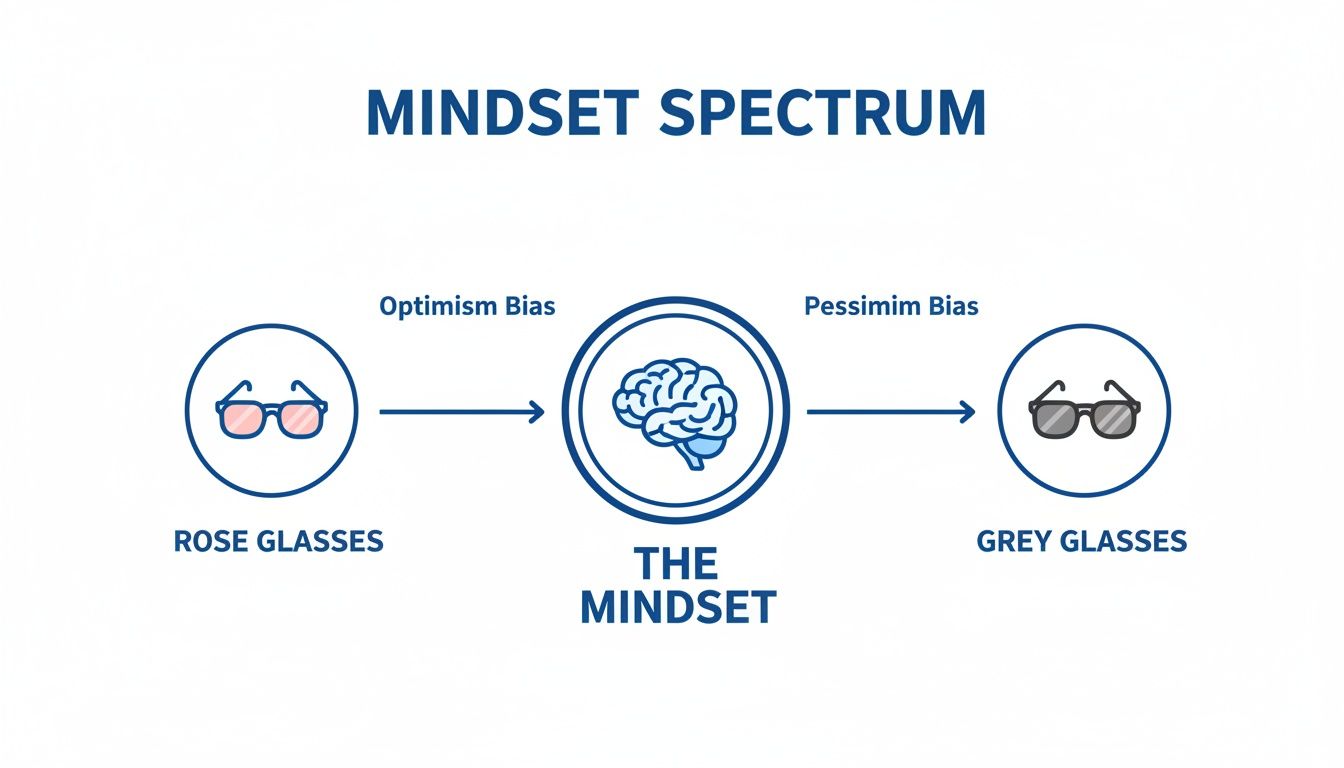
It’s a powerful visual reminder of how the "glasses" we wear directly influence our well-being and choices.
What Does a Positive Attitude Look Like?
A positive attitude isn't about ignoring life's difficulties. It's about approaching challenges with a hopeful and constructive mindset, grounded in optimism and a belief in your own ability to grow.
This outlook helps cultivate resilience, allowing you to bounce back from tough situations. Instead of feeling defeated by workplace stress or a personal hurdle, you are better equipped to find a path forward with compassion for yourself.
"Positive thinking is important because it broadens your sense of possibility and opens your mind, allowing you to build new skills."
This mindset encourages you to see setbacks as learning opportunities, which is a cornerstone of lasting happiness and well-being.
What About a Negative Attitude?
A negative attitude often involves pessimism and cynicism, a tendency to expect the worst. This can lead to feelings of hopelessness and anxiety, making it difficult to see a way through challenges.
These thought patterns are often forms of cognitive distortions that can create a cycle of stress. This mindset can make you feel powerless, which may amplify issues like depression if left unaddressed.
Positive Attitude vs Negative Attitude At A Glance
To make it even clearer, let's look at the practical differences. This table shows how each mindset influences our thoughts, feelings, and actions.
| Aspect | Positive Attitude | Negative Attitude |
|---|---|---|
| Core Belief | I can improve and overcome challenges. | My abilities are fixed, and challenges are threats. |
| Focus | Opportunities, solutions, and learning. | Problems, limitations, and what could go wrong. |
| Reaction to Setbacks | "What can I learn from this?" | "This proves I'm not good enough." |
| Emotional State | Hopeful, resilient, and motivated. | Anxious, pessimistic, and helpless. |
| Behaviour | Proactive, persistent, and open to new things. | Avoidant, easily discouraged, and resistant to change. |
Seeing it laid out like this highlights how your inner dialogue can steer your entire life. One path leads to growth and resilience, while the other can keep you feeling stuck.
The Real-World Impact on Your Life
Your attitude is much more than a state of mind. It has real, tangible effects on every area of your life, from your mental health to your physical well-being.
The difference between a positive attitude and a negative attitude is the invisible thread weaving through your daily experiences.

Let's explore how your perspective directly shapes these critical parts of your life.
Psychological Well-being
Think of your mindset as the architect of your emotional world. A positive attitude, built on self-compassion, acts as a shock absorber for life's challenges, helping you build resilience.
This is especially true for managing workplace stress and avoiding burnout. A positive outlook helps you see a tight deadline in a bustling city like Mumbai as a challenge to rise to, not a trigger for anxiety.
On the other hand, a persistently negative mindset can trap you in a cycle of worry. Over time, this can contribute to more serious concerns like depression.
In India, the conversation around mental health is growing. With challenges like depression and anxiety becoming more recognised, the need for supportive mindsets is clear. You can learn more about these trends in this Indian mental health market report.
Physical Health Consequences
The mind-body connection is incredibly strong. When you're stuck in negative thought patterns, your body responds by releasing stress hormones.
Over time, this chronic stress can show up in physical ways, like poor sleep, higher blood pressure, and a weakened immune system. A positive attitude, in contrast, encourages relaxation and healthier habits, which supports your overall well-being.
Social and Professional Life
Your attitude radiates outward and shapes how others see you. A positive person often comes across as more approachable and cooperative, making it easier to build supportive relationships.
A negative outlook can sometimes create distance, leading to feelings of isolation. This is where professional counselling can offer practical strategies for building healthier, more rewarding connections with others.
Practical Strategies to Cultivate Positivity
Shifting your mindset is a journey, not an overnight fix. It's like tending a garden—it requires patience, consistent effort, and the right tools.
The good news is that you can start today with small, manageable practices. These foundational habits can help rewire your brain for greater resilience and happiness over time.
Identify and Reframe Your Thoughts
One of the most powerful first steps is to listen to your own inner dialogue. The goal is not to silence negative thoughts but to gently challenge and reframe them.
When you catch a negative thought, pause and ask yourself if there's another, more balanced way to see the situation. For example, instead of "I failed that presentation," you could try, "One part was tough, but I learned a lot for next time." This simple shift promotes growth, which is crucial for managing feelings of anxiety or depression.
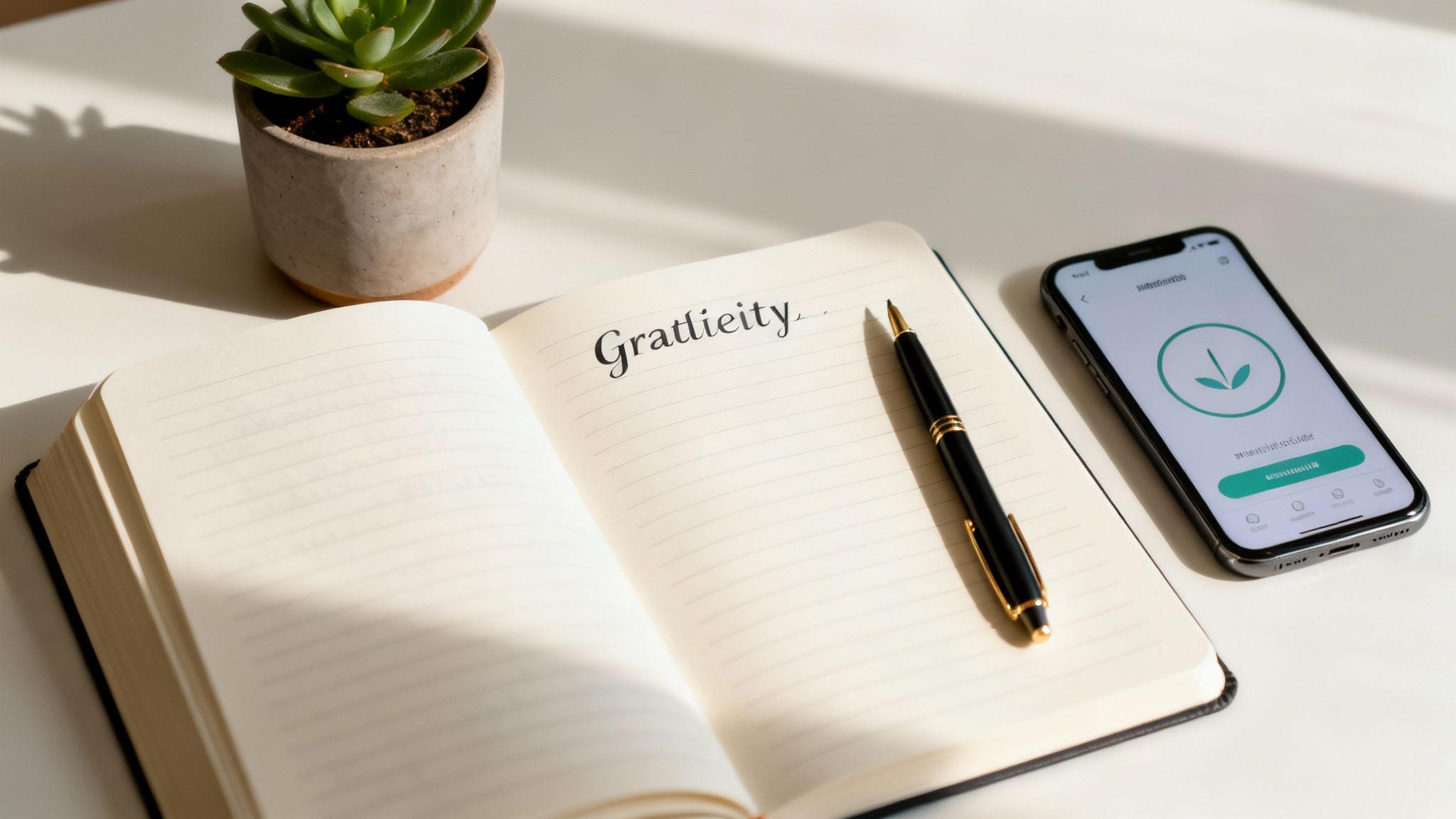
Cultivate a Gratitude Practice
Gratitude is a powerful antidote to negativity. It trains your brain to notice the good in your life, even when things are difficult, which greatly enhances your well-being.
You can start by keeping a journal and writing down three things you're thankful for each day. It could be as simple as a warm cup of chai or a kind word from a friend. This practice shifts your focus from what's missing to what you have.
"Positive thinking is important because it broadens your sense of possibility and opens your mind, allowing you to build new skills."
This idea of "broadening and building" helps you collect positive emotional experiences, strengthening your ability to cope when stress arises.
Embrace Mindfulness and Presence
Much of our anxiety comes from worrying about the future or dwelling on the past. Mindfulness is the simple practice of bringing your attention to the present moment.
It helps calm a racing mind by allowing you to observe your thoughts without getting carried away by them. Starting with just a few minutes of focusing on your breath each day can interrupt cycles of negative thinking and is an invaluable tool for your mental health. This practice can be especially helpful when professional therapy or counselling isn't immediately accessible.
Knowing When to Seek Professional Support
While self-help strategies are valuable, it's also important to recognise when you might need more support. There is a difference between a bad day and a negative mindset that has begun to impact your daily life.
Sometimes, a deeply ingrained negative outlook can be a sign of underlying challenges like anxiety or depression. If feelings of hopelessness or worthlessness feel constant, reaching out for professional guidance is a sign of great strength.
Red Flags That You Might Need More Support
How do you know when it's time to talk to someone? If the balance between your positive attitude and negative attitude feels persistently off, here are a few signs to watch for:
- A lasting low mood that continues for weeks.
- Losing interest in activities you once enjoyed.
- Significant changes in your sleep or appetite.
- Constant worry or a sense of dread you can't shake.
This is not a diagnostic checklist, but rather a guide to help you check in with your own well-being. If these points feel familiar, it could be a good time to speak with a professional.
How Therapy and Counselling Can Help
Professional therapy or counselling provides a safe, confidential space to explore the roots of a negative attitude. A trained therapist can offer personalised tools to manage difficult emotions and build lasting resilience.
At DeTalks, we offer confidential, science-backed assessments to provide you with clearer insight. These are informational tools, not diagnostic ones. They can be an excellent first step in connecting you with qualified therapists who can support your journey through workplace stress, burnout, and other life challenges.
Wrapping Up: Your Journey Towards a Healthier Mindset
Shifting from a negative to a more positive outlook is not about forcing happiness. It's about building a stronger foundation for your emotional health, a journey that requires patience and self-compassion.
Every small step you take matters, from noticing your thoughts to taking a moment for gratitude. This is how you build true resilience—the kind that helps you navigate everything from workplace stress and anxiety to feelings connected with depression.
The most important takeaway is this: you are not your negative thoughts. You have the power to observe them, question them, and slowly cultivate a more balanced and supportive outlook.
If you ever feel stuck, remember that seeking professional guidance through therapy or counselling is a sign of strength. When you feel ready, we invite you to explore the supportive resources and therapist connections available at DeTalks.
Frequently Asked Questions
It's natural to have questions as you start exploring your mindset. Here are answers to some of the most common ones.
Can I Completely Get Rid of a Negative Attitude?
Trying to eliminate all negative thoughts is an exhausting and unrealistic goal. A much healthier aim is to learn how to manage them without letting them take over.
Everyone experiences negative thoughts. Through practices learned in therapy and counselling, like mindfulness, you can learn to acknowledge these thoughts and let them pass. This builds genuine resilience and a more balanced mindset.
Is a Positive Attitude the Same as Being Happy All the Time?
Not at all. This is a common misconception. A positive attitude is not about ignoring life's problems; it's about how you choose to face them.
It's about believing you can handle what comes your way and looking for lessons even in difficult times. A positive attitude fosters hope, not fake happiness, and allows you to feel all your emotions without letting difficult ones steer your life.
How Long Does It Take to Build a More Positive Outlook?
There is no set timeline, as changing long-held thought patterns is a gradual process that differs for everyone. It takes consistent effort using strategies like gratitude, mindfulness, and challenging thoughts that fuel anxiety and depression.
Some people feel small shifts in their well-being within weeks, while for others, it's a longer journey. Being patient and kind to yourself is key. If you feel stuck, professional counselling can provide the guidance needed to make meaningful progress.
Ready to take the next step on your journey to greater well-being? The team at DeTalks is here to help. Explore our confidential, science-backed assessments or connect with a qualified therapist who can support your personal growth. Visit DeTalks to get started.